
Nickels rarely look impressive at first glance. Most are small, worn, and it is so easy to ignore how much are nickels worth sometimes. That simplicity is exactly why experienced collectors love them. Behind modest designs hide key dates, strike rarities, and condition gaps that can turn an ordinary find into a serious asset. Let’s reveal how professionals collect nickels with focus, discipline, and long-term value in mind.

Build a Strong Foundation Before You Buy Anything
Nickel collecting attracts serious collectors for one reason: asymmetry between cost and upside. Many key nickels remain affordable compared to silver and gold coins, yet their rarity and demand can push values sharply higher. Professionals do not start by buying everything. They start by understanding structure and using a free coin value checker before considering a purchase.
Learn the nickel timeline first
Every advanced nickel collection rests on three main series. Knowing their boundaries prevents costly beginner mistakes.
- Liberty Head Nickels (1883–1913)
Elegant but challenging. Most dates are scarce, and condition drives value fast. The series is capped by the legendary 1913 issue, with only five known examples. - Buffalo Nickels (1913–1938)
Designed by James Earle Fraser, this series combines strong visual appeal with extreme condition sensitivity. Dates and mint marks matter, but strike quality often matters more. - Jefferson Nickels (1938–present)
Long-running and accessible. Early dates and strike details separate common coins from premium examples. Collectors pay close attention to steps on Monticello and use the coin checker app to detect rare varieties.
Understanding these divisions helps you decide where to focus instead of spreading money thin across incompatible goals.
Know where silver hides in nickels
Nickels are mostly copper-based, but one short window breaks that rule. War nickels minted from 1942 to 1945 contain 35% silver, introduced due to wartime metal shortages.
How professionals spot them quickly:
- Large P, D, or S mint mark above Monticello
- Slightly gray tone compared to standard nickels
- Weight difference detectable on precise scales
These coins form a natural bridge between bullion value and numismatic demand, making them ideal early targets.
Choose strategy before shopping
Professional collectors rarely chase everything at once. They define a lane.
Common pro strategies include:
- Completing date-and-mint sets for Buffalo or Jefferson nickels
- Focusing on key dates only, skipping fillers
- Specializing in high-grade moderns with strike premiums
- Hunting varieties and errors instead of base dates
Each approach demands different budgets and patience levels. Mixing them leads to unfocused collections and weak resale outcomes.
Why nickels reward patience
Nickels circulated heavily. Many survivors show wear, corrosion, or weak strikes. That reality creates opportunity. When a sharp example appears, demand spikes fast.
A common-date Buffalo nickel in poor shape sells for a few dollars. The same date with full horn detail can sell for multiples of that price. This condition gap is where professionals operate.
Before buying a single coin, the rule is simple:
Learn the series. Learn the weak points. Then buy selectively.
Condition, Grading, and Varieties That Separate Pros from Amateurs
After mastering the timeline, professionals shift focus to condition and strike quality. This is where most value is created—or lost.
Condition beats age in nickel collecting
Nickels wear fast. Soft metals and heavy circulation mean many survivors look flat. Pros pay for detail, not just dates.
What they look for by series:
- Liberty Head nickels: sharp hair curls and full “LIBERTY” on the headband
- Buffalo nickels: horn detail, strong braid, clear date and mint
- Jefferson nickels: steps on Monticello, clean fields, sharp lettering
A worn key date can still matter. A shiny common coin rarely does.
Grading realities you need to accept
Third-party grading validates condition and protects value. The two standards are PCGS and NGC.
Why grading matters for nickels:
- Price jumps sharply at MS-65 and above
- Counterfeits exist for key Buffalo dates
- Market trust improves liquidity
Example that surprises beginners: a 1938-D Jefferson trades near $1 circulated, yet reaches $40–$50 in MS-65. Same date. Different outcome.
Avoid coins with cleaning, scratches, or corrosion. These defects can erase 50–90% of value, even on better dates.
Varieties that professionals track
Varieties turn ordinary nickels into premium pieces. Pros study them early.
High-impact examples include:
- Buffalo 1913-S Type 2 — redesigned reverse, $500+ in VF
- Buffalo 1926-S — low survival, strong premiums
- Jefferson “Full Steps” (FS) — 5 or 6 complete steps on Monticello
- War nickel overdates — especially 1943-P over 1942
Full Steps alone can multiply prices several times over on otherwise common Jeffersons.
Key dates and varieties snapshot
| Series | Key date / variety | Mintage | Value range (VF to MS-65) |
| Liberty Head | 1913 | 5 known | $3M+ |
| Buffalo | 1913-S Type 2 | 1.86M | $500 – $5,000 |
| Buffalo | 1926-S | 970K | $200 – $2,500 |
| Jefferson | 1938-D | 5.37M | $2 – $50 |
| War nickel | 1943-P over 1942 | rare | $100 – $1,000 |
The professional mindset
Pros do not chase “nice for the grade.” They chase scarcity confirmed by condition. They pass on dozens of coins to buy one that fits their criteria.
That discipline explains why their sets appreciate while unfocused collections stall.
Hunt Efficiently, Protect Your Coins, and Exit at the Right Time
Once conditions and varieties are clear, professionals focus on the process. How you search, store, and sell matters as much as what you buy.
Smart ways pros hunt for nickels
Experienced collectors look where competition is low and volume is high.
Effective hunting methods include:
- Bank roll searching for Jefferson nickels, especially pre-1960s
- Bulk dealer boxes labeled “commons” where varieties slip through
- Estate lots assembled decades ago, often untouched by modern grading
- Shows late on the final day, when dealers discount inventory
Patience pays. Most finds are ordinary. A few are not.
Use tools to verify before keeping or buying
Speed matters during hunts. Photo-based identification helps confirm basics before deeper study. Coin ID Scanner lets collectors photograph a nickel and instantly review mint year, composition, diameter, weight, and pricing from a database covering 187,000+ coins.
Professionals use tools to filter, not to decide final value. Certification, variety attribution, and auction comps still rule.
Store nickels like assets, not souvenirs
Nickels react badly to poor storage. Improper handling destroys value quietly.
Best practices include:
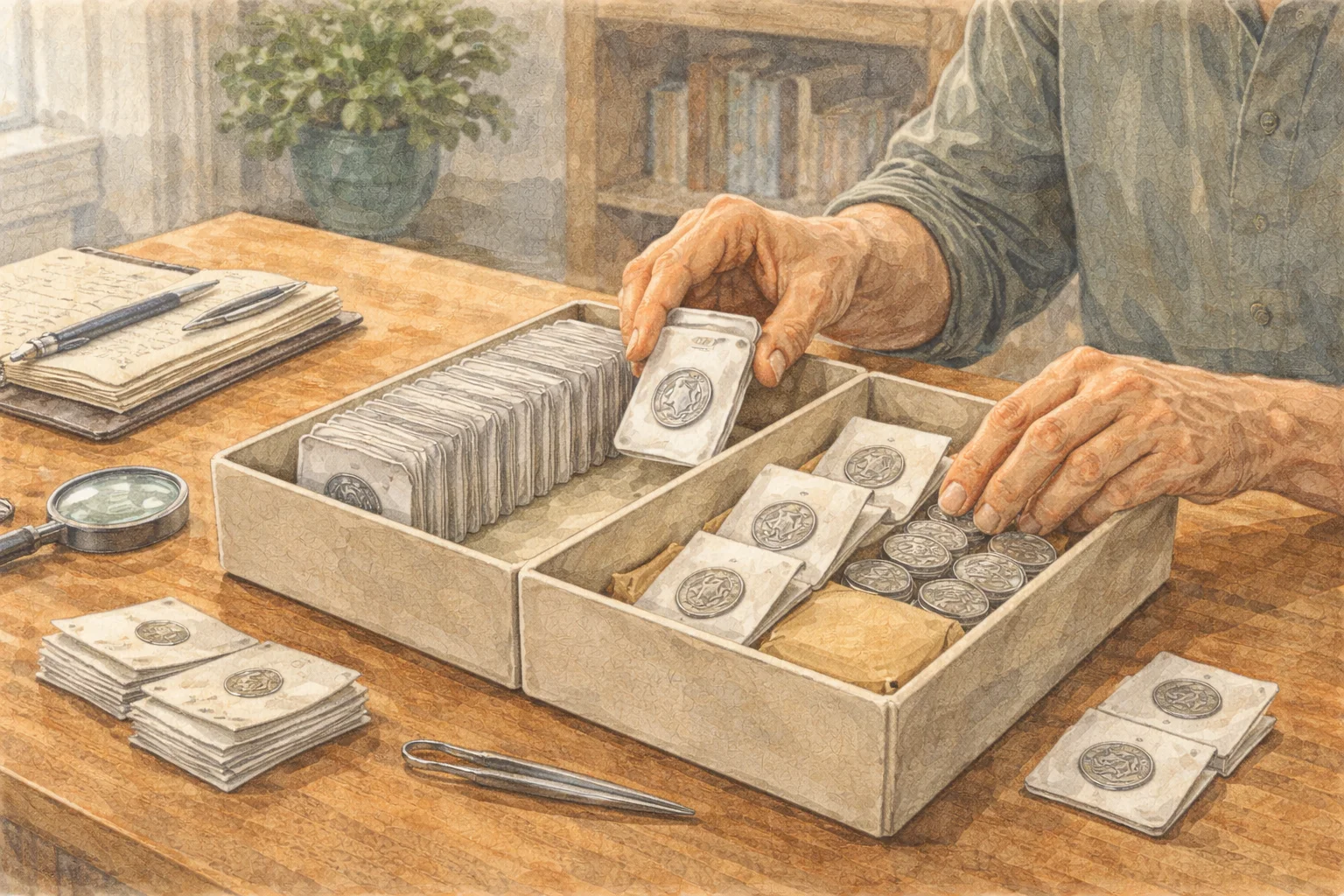
- Use inert 2×2 flips or archival albums
- Avoid PVC at all costs
- Handle coins by the edges only
- Store in low-humidity environments
- Separate raw coins from slabbed coins
Buffalo nickels are especially vulnerable to corrosion. Preservation protects upside.
Selling strategies professionals follow
Selling is planned from the start.
Strong approaches include:
- Track comps on Heritage and other major auctions
- Sell key dates individually, not in mixed lots
- Time sales during collector demand spikes, not bullion rallies
- Avoid selling cleaned or problem coins as “upgrades”
Nickels reward timing. Rushing out erases gains.
Build value through focus, not volume
Professional nickel collections grow narrower, not larger, over time. Collectors upgrade, replace, and refine instead of hoarding.
The pro formula stays simple:
- Fewer coins
- Higher quality
- Documented scarcity
- Clean surfaces
Nickels remain one of the most accessible ways to apply that formula. Low entry costs. Clear rarity tiers. Strong collector bases.
Follow these principles, and nickel collecting stops feeling random. It becomes deliberate, repeatable, and profitable—exactly how a pro numismatist approaches the hobby.