
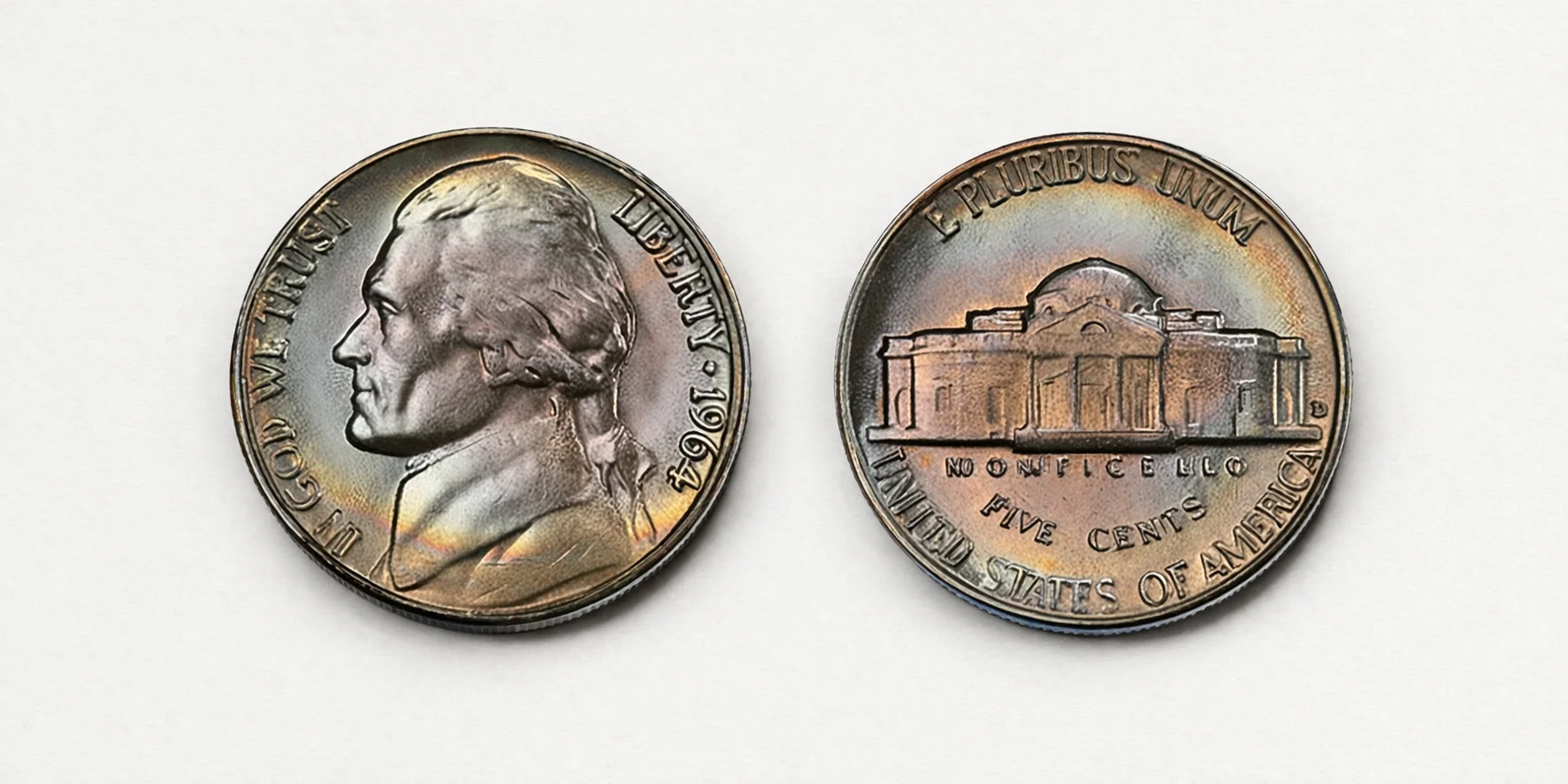
Jefferson nickel mintages look simple on paper. One date shows a low output. Another shows a huge one. That seems easy to read. The problem starts when a collector tries to buy the coins. Some low-mintage nickels are still available without much pain. Some higher-mintage pieces turn harder once grade, strike, and market supply enter the picture. That is where the survival rate matters.
Mintage tells how many coins were struck. Survival rate points to something else. It asks how many coins still exist, how many reached collectors, and how many remain in useful condition. Those are not the same numbers. For Jefferson nickels, the gap can be wide.
What Mintage Tells You
Mintage is still important. It gives the first clue. A small output should make a collector stop and look closer. A large output usually suggests that the date was common at release.
That is the limit of the number. Mintage does not show what happened after release. It does not show how many coins were worn out in circulation. It does not show how many were saved in rolls, bags, and sets. It does not show how many survive in Mint State or with Full Steps.
What Mintage Can Tell You
- Original output size
- Relative production level
- Dates worth studying first
- Which issues may need more context
What Mintage Cannot Tell You
- Real survival today
- Mint state availability
- Full steps difficulty
- How easy the coin is to buy
This is why collectors who rely on mintage alone often misread the series. The number is the starting point. It is not the final answer.
Why Survival Rate Changes the Story
Survival rate is closer to the real collector experience. It reflects what stayed in the market. A coin can have a low mintage and still survive well if people saved it early. Another coin can have a big mintage and still feel tougher if most examples entered heavy circulation and few were preserved in strong condition.
Jefferson nickels are a good series for this comparison. The set is long. It includes prewar dates, wartime silver issues, postwar nickels, and modern circulation coins. Saving habits changed over time. Strike quality changed, too. Market behavior shifted with roll hoarding, Mint set collecting, and registry competition.
That mix makes the series useful for study. Printed output and practical availability often move in different directions.
Low Mintage Does Not Always Mean a Hard Coin
A low mintage gets attention fast. That is natural. The market reacts to small production numbers. Still, a low output does not always create a difficult coin in real life.
The best-known case is the 1950-D nickel. Its mintage is famous because it is very low for the series. Yet the coin was noticed early. Collectors saved rolls. Dealers saved quantity. As a result, the date is not as difficult in Mint State as the raw number suggests. It is important. It is not invisible.
The 1939-D tells a slightly different story. It is a better date, and it remains important in the set. At the same time, collectors have studied it for decades, so demand and visibility stay strong. The date is not common, but it is also not a mystery coin that never appears.
Low Mintage Vs Real Collector Availability
| Date | Mintage Signal | Survival Pattern | Practical Result |
| 1939-D | Low output | Better known and long studied | Available but important |
| 1950-D | Very low output | Heavily saved early | Easier than the number suggests |
| 1943-P | Wartime issue | Strong saving interest | Readily seen in the market |
| 1938-D | Lower early-date output | Standard collector demand | Collected but not extreme |
This is the first lesson of the series. Small output can create a key date. It does not always create severe scarcity.
High Mintage Does Not Always Mean an Easy Coin
The opposite mistake is common too. A large output can make a date look easy. That works only up to a point.
Many Jefferson nickels with strong mintages survived in worn grades. That does not mean they survived well in a sharper condition. It also does not mean they survived with strong strikes. A coin may be common in pocket-change grade and much less friendly in Gem Mint State or with Full Steps.
That difference affects coin value more than many beginners expect. The market pays one level for a basic example and a very different level for a sharply struck, well-preserved one. A huge mintage cannot fix weak step detail or years of bag marks.
The 1964-D is a good example of this idea. It was struck in massive numbers. That makes the date look easy on paper. Yet high-end pieces with better eye appeal and stronger detail do not feel nearly as common as the output suggests. The quantity at release did not create equal quality at survival.
Why a High-Mintage Nickel Can Still Be Hard
- Heavy circulation
- Weak strike quality
- Poor step detail
- Heavy contact marks
- Low survival in better grades
This is where Jefferson nickels become more interesting. The series teaches that common does not always mean easy.
Rolls, Sets, and Hoarding Matter
Collector behavior changes survival. This is one of the most important parts of the story.
When a date is noticed early, people save it. Rolls stay unopened. Bags stay in dealer stock. Mint sets protect coins from wear. All of that improves the later supply. The coin may still be important, but the market has material to work with.
When a date is ignored, the opposite can happen. The coin enters circulation, takes abuse, and survives mostly in worn form. Later collectors then face a harder search in nicer grades.
What Often Improves Survival
- Original rolls
- Unopened bags
- Mint set storage
- Early collector attention
- Long dealer retention
This helps explain why two nickels with different mintages can feel closer in real availability than expected. It also explains why some better dates are more available than the printed number first suggests.
Wartime Nickels Follow a Different Pattern
The wartime issues deserve separate treatment. These nickels were struck from 1942 through 1945 with silver in the alloy. They stand apart in the series, and collectors noticed them.
That mattered for survival. Their different composition made them easier to spot. Many were saved because they were unusual. They also became popular with both nickel collectors and silver-minded buyers. That created a different path from many regular issues.
A wartime nickel can still be common by collector standards. The point is different. Its survival story does not always match a normal prewar or postwar coin. The special composition helped keep more of them visible in the hobby.
One Date Can Have Several Markets
Collectors also need to separate grades. A date can be easy in one part of the market and difficult in another. This point matters a lot for Jefferson nickels.
A circulated example may be simple. A lower Mint State coin may still be available. A Gem piece can become tougher. A Full Steps example may sit in a much smaller group. One date, then, can have several survival stories at once.
| Market Level | Typical Availability | Main Issue |
| Circulated | Often easy | Wear and eye appeal |
| Lower mint state | Usually available | Marks and luster |
| Gem mint state | Harder | Cleaner surfaces |
| Full steps | Much harder | Strike and step detail |
This is why raw mintage can mislead even experienced buyers. The number does not tell which market level you are trying to enter.
What Collectors Should Compare Instead of Mintage Alone
A better reading method is simple. Start with mintage, but move quickly to survival and grade.
Check how often the date appears in circulated form. Then check the Mint State supply. After that, ask how often the coin shows strong steps. Finally, look at market demand. A date with moderate output and strong demand can feel tougher than expected. A date with low output and deep saved supply can feel easier than expected.
What To Compare Before Judging a Jefferson Nickel
- Printed mintage
- Circulated survival
- Mint state supply
- Full steps availability
- Saving history
- Current market presence
This order gives a better picture than a mintage list by itself.
A Digital Tool Can Help at the First Stage
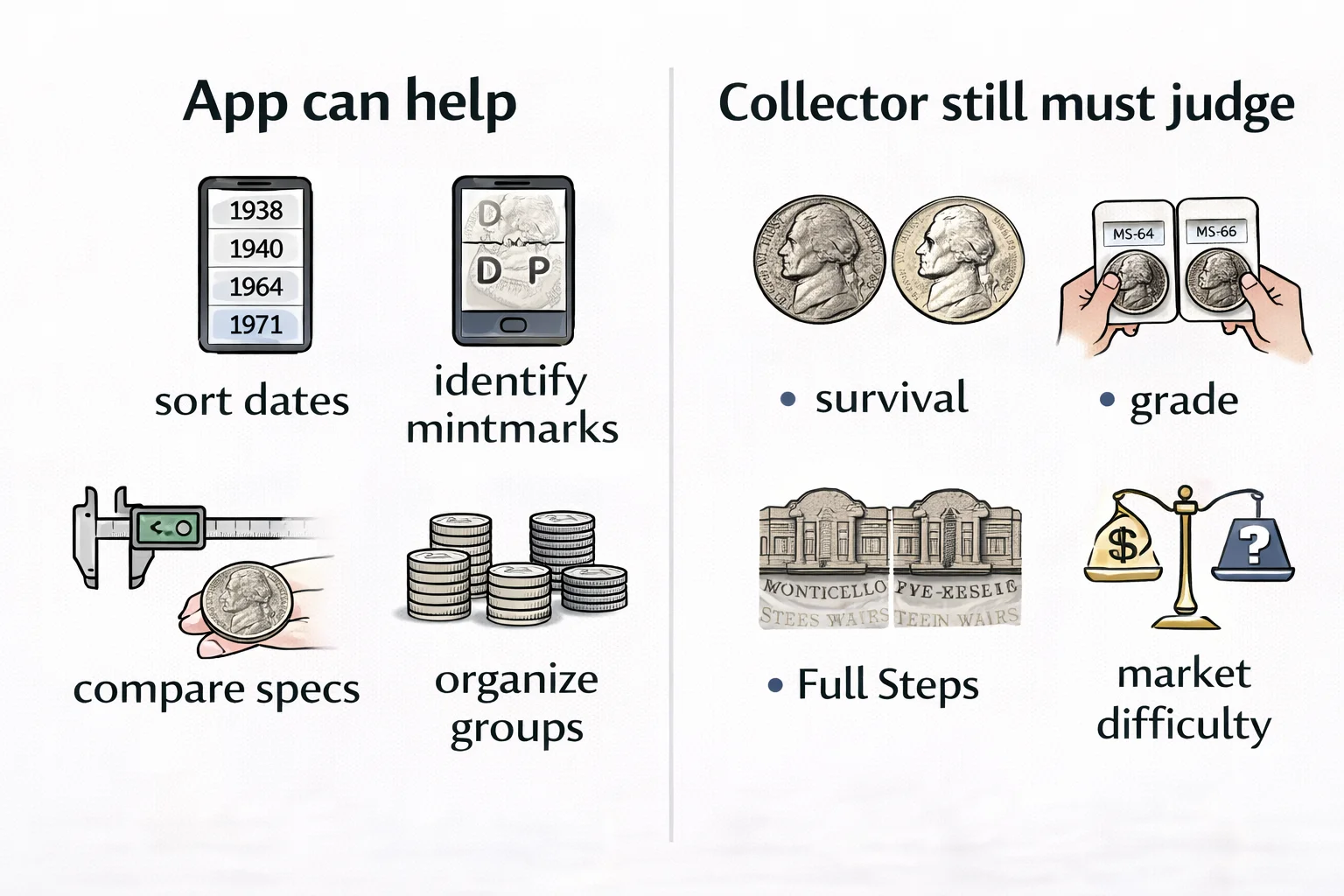
A digital tool will not solve the survival-rate question on its own. It can help with sorting and reference work.
A coin identifier app is useful when a collector wants to separate dates, mintmarks, and basic specs before deeper study. That is where Coin ID Scanner can help. Its AI Coin Helper handles quick reference questions. Its database covers more than 187,000 coins. Smart Filters help narrow similar issues. This saves time when a collector reviews mixed groups or compares several Jefferson nickels at once.
The practical use is simple. The app helps organize the material. The collector still has to judge survival, grade, and market difficulty.
Final Reading of the Series
Jefferson nickels reward a more careful approach. Mintage shows the starting scale of production. Survival rate shows what the hobby actually received. Those numbers can move together, but they often do not.
A low-mintage nickel can survive well because it was saved early. A high-mintage coin can become less friendly in better grades because most examples were spent and damaged. Full Steps pushes the separation further. That is why a printed total and a real market experience can look so different.